New Paper Published!: Machine learning enables rapid assessment of potential cetacean health indicators

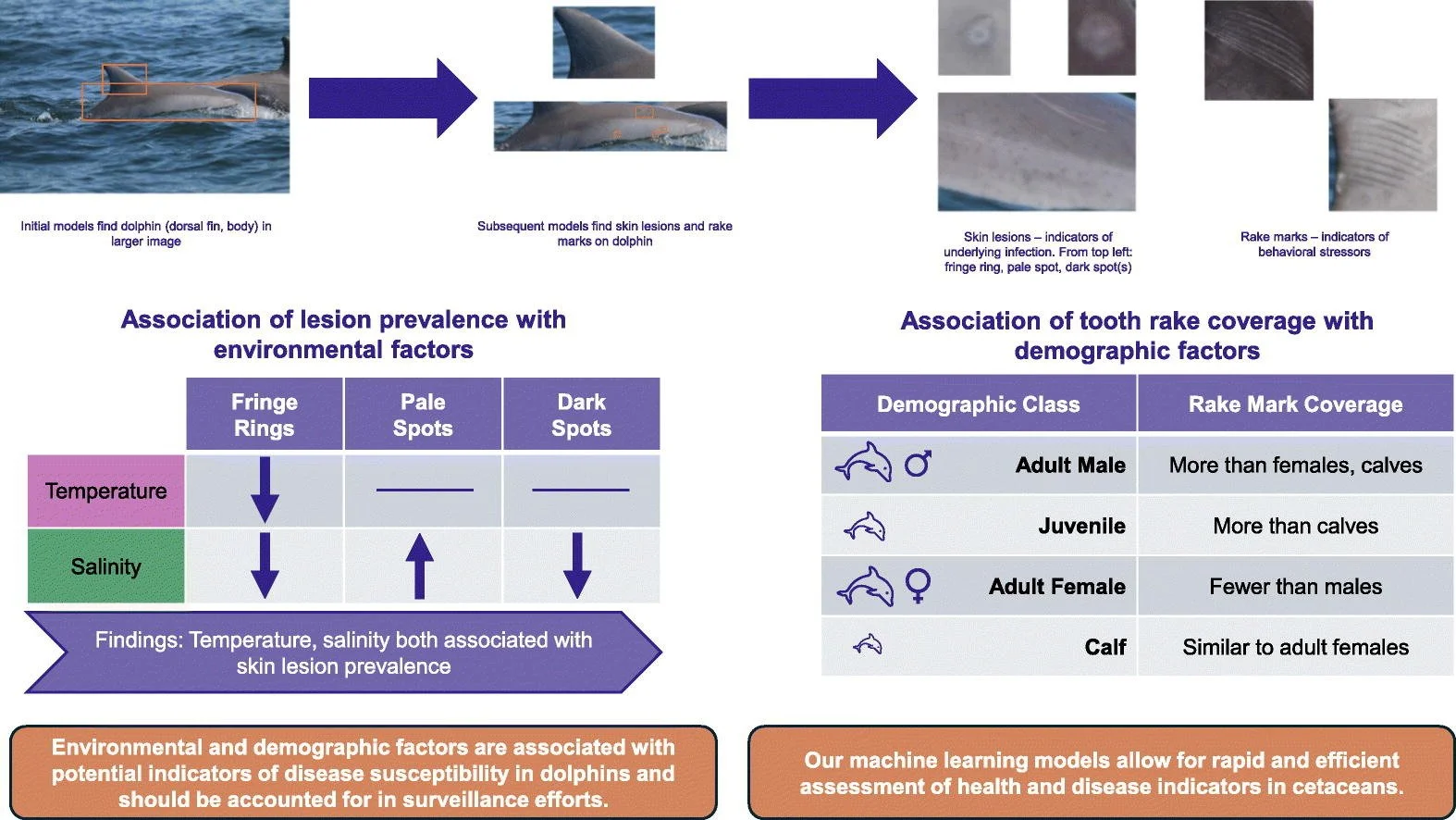
Former Lab Assistant Colin Murphy and Post-Doctoral Fellow Melissa Collier published an article in the Science of the Total Environment regarding the utilization of machine learning in assessing body conditions and health indicators of dolphins in the Potomac River and Chesapeake Bay.

You can read their article by clicking this link!

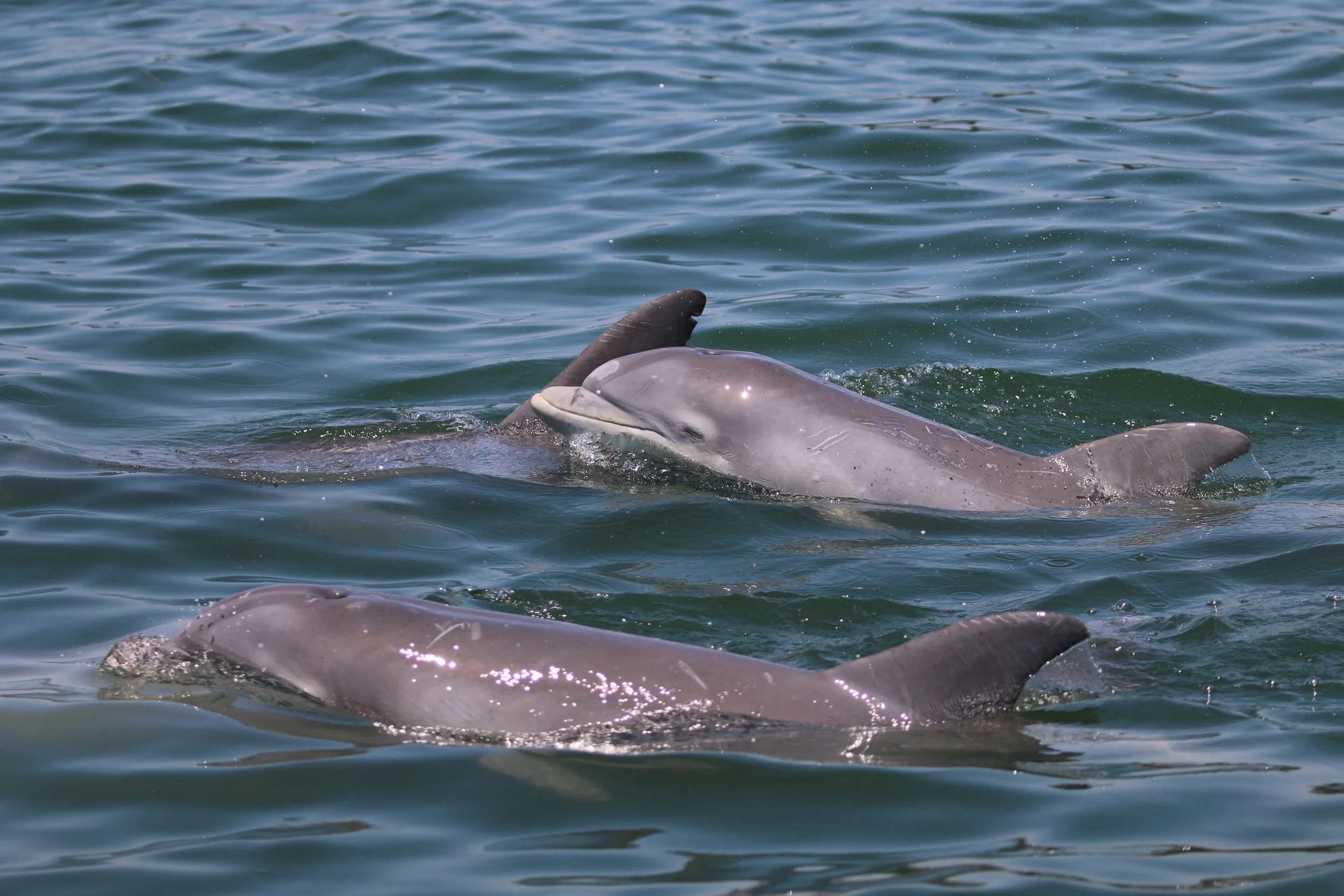
“Photographic health assessments are one of the best ways to monitor dolphin health, because it doesn't require taking any samples from the dolphins, which is an invasive and costly tactic. Skin lesions and scars captured in the photos we collect every field season can tell us a lot about stress and disease, but it takes a long time (hundreds of hours) to search for them in every single dolphin photograph. So we built an object-detection algorithm that automatically finds these small skin patterns. You can think of it like the iPhone photo search feature: type in “dog” and it gathers all your dog photos. Using this algorithm speeds up the manual processing of our 100,000+ photographs for skin lesions and scars, and gives us an outlook into the dolphin's health and stressors without having to use invasive methods,” says Dr. Collier when describing their paper.

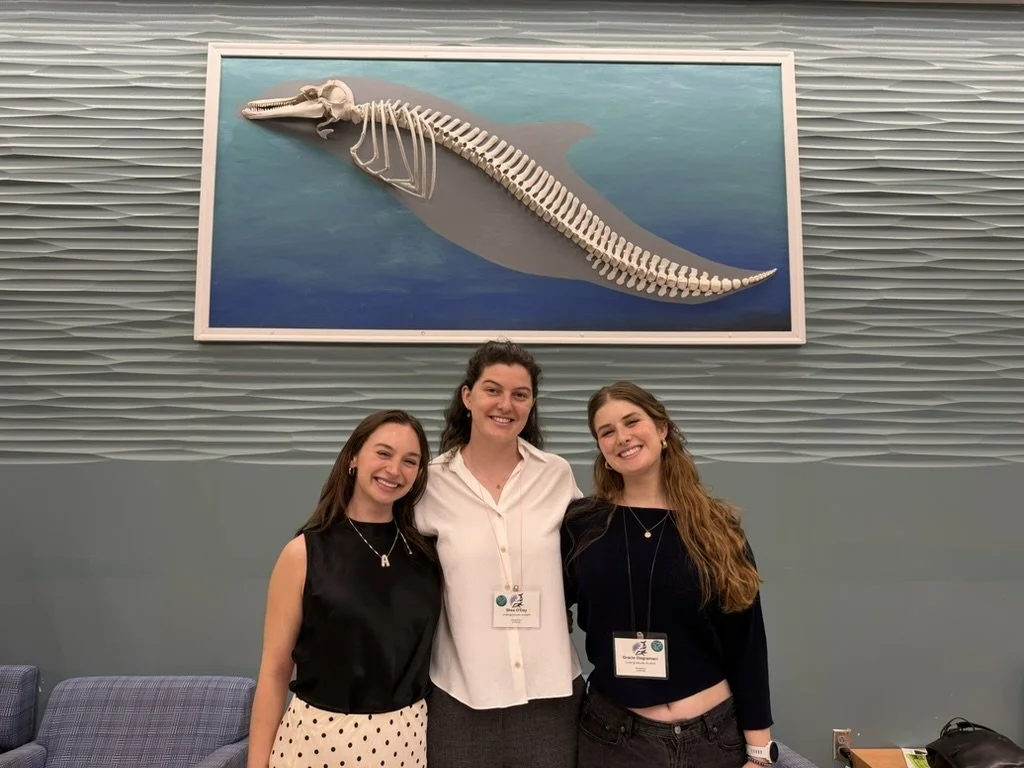
Shea O'Day Presents Research at RISE

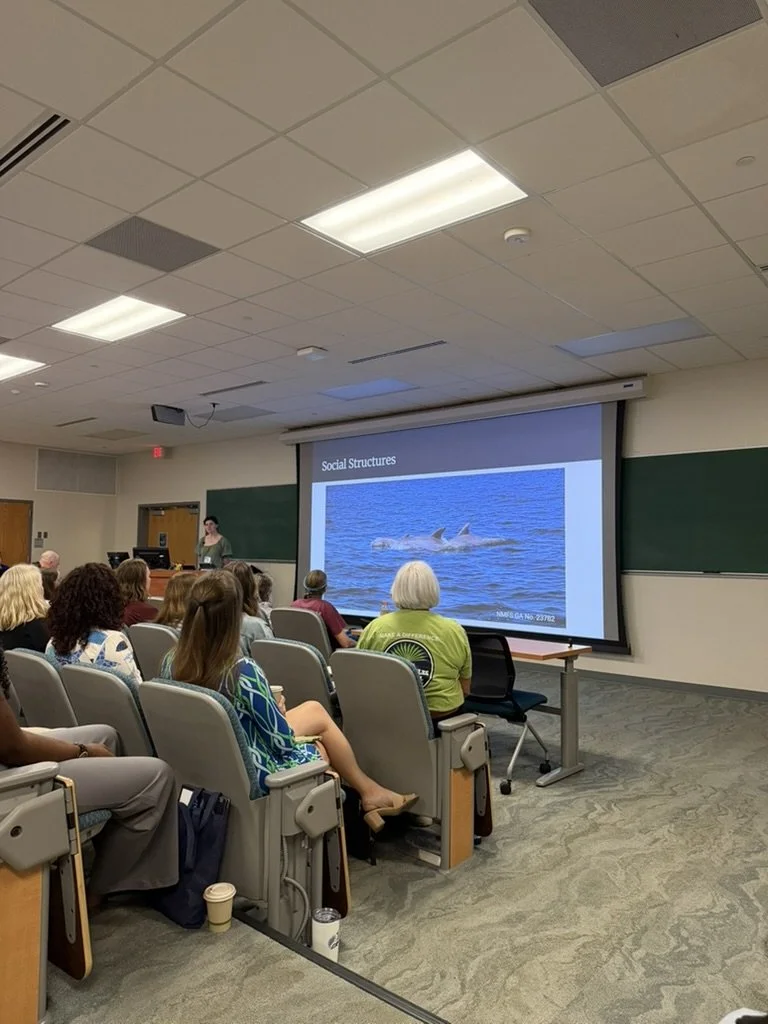
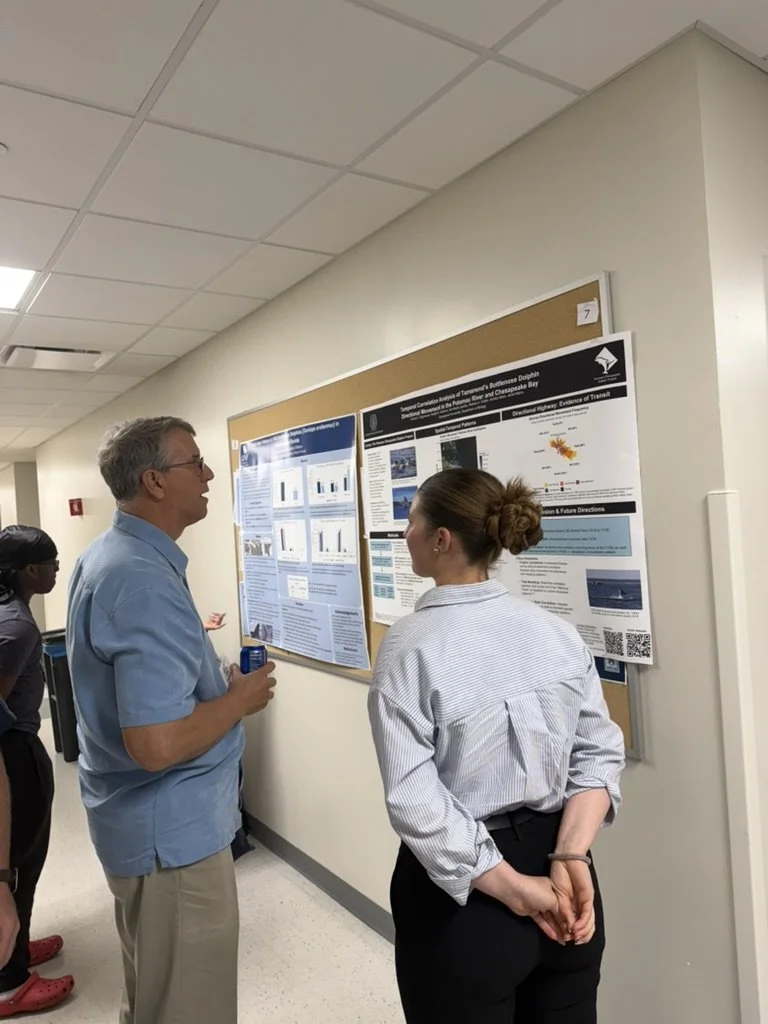
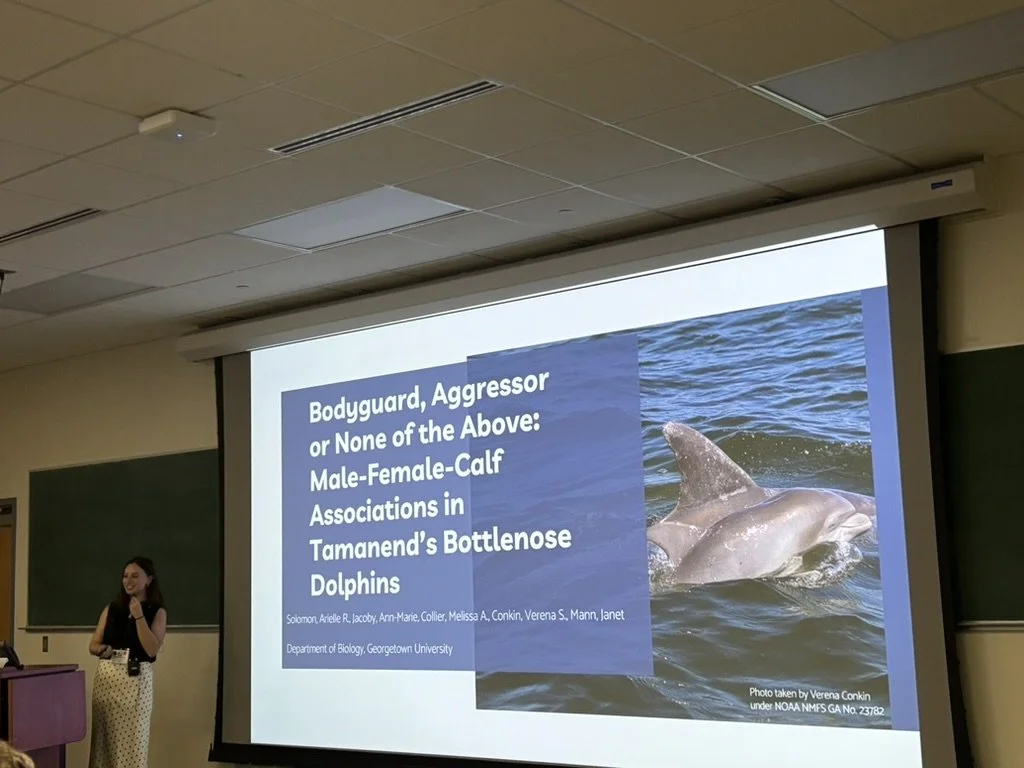
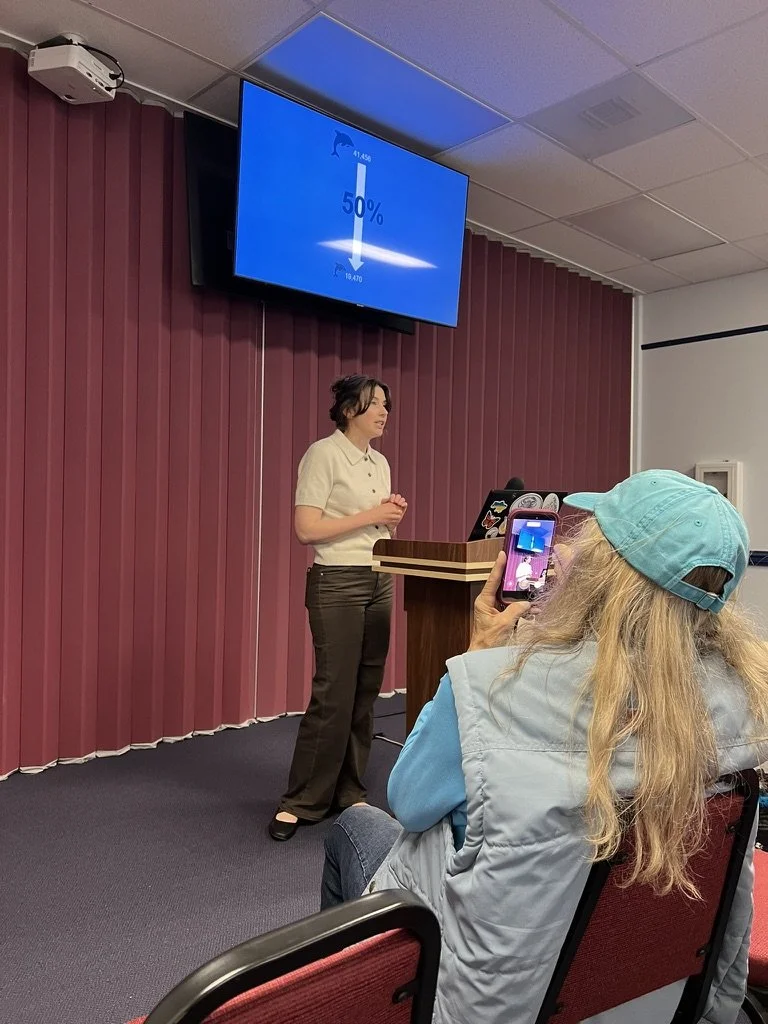
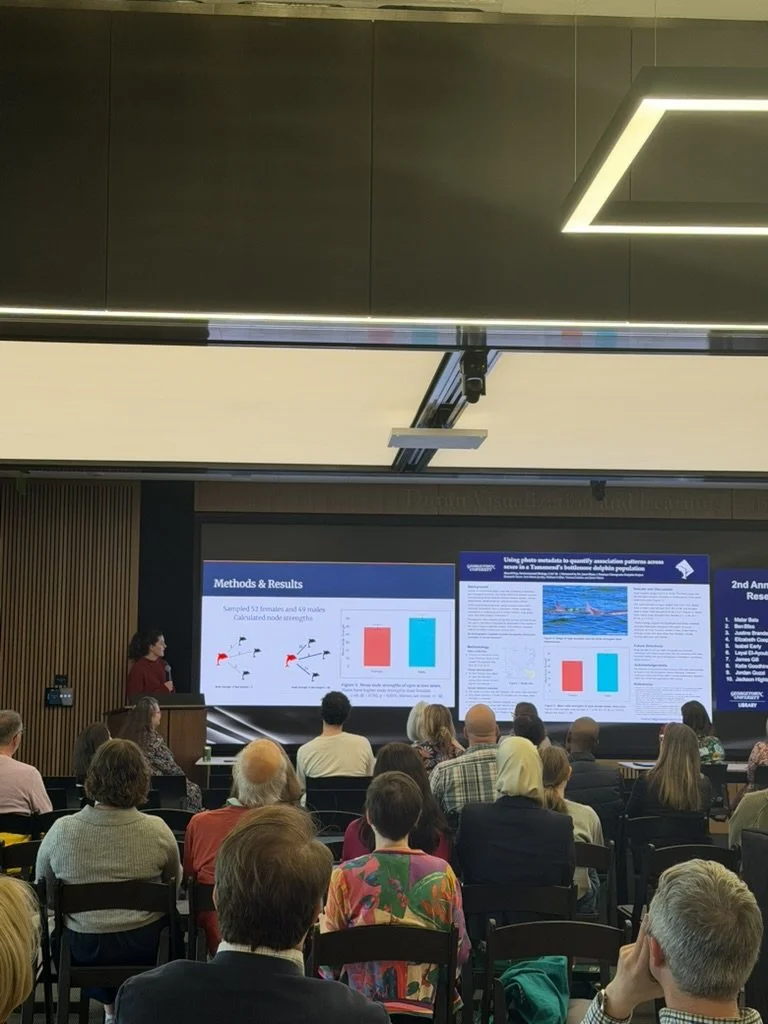
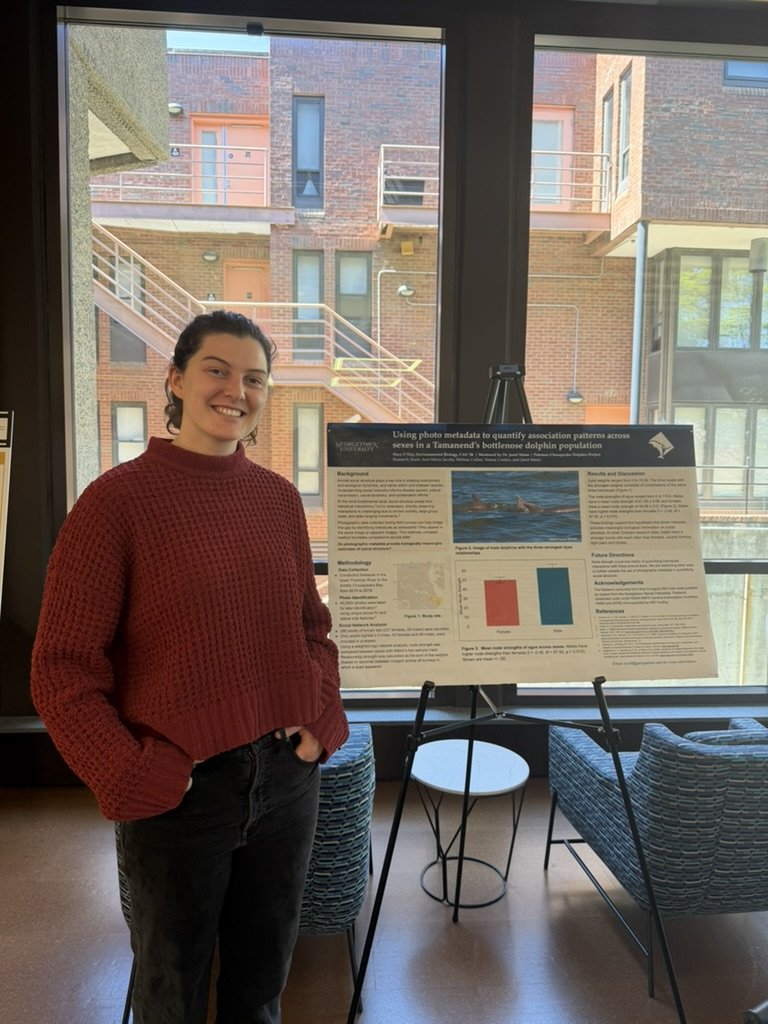
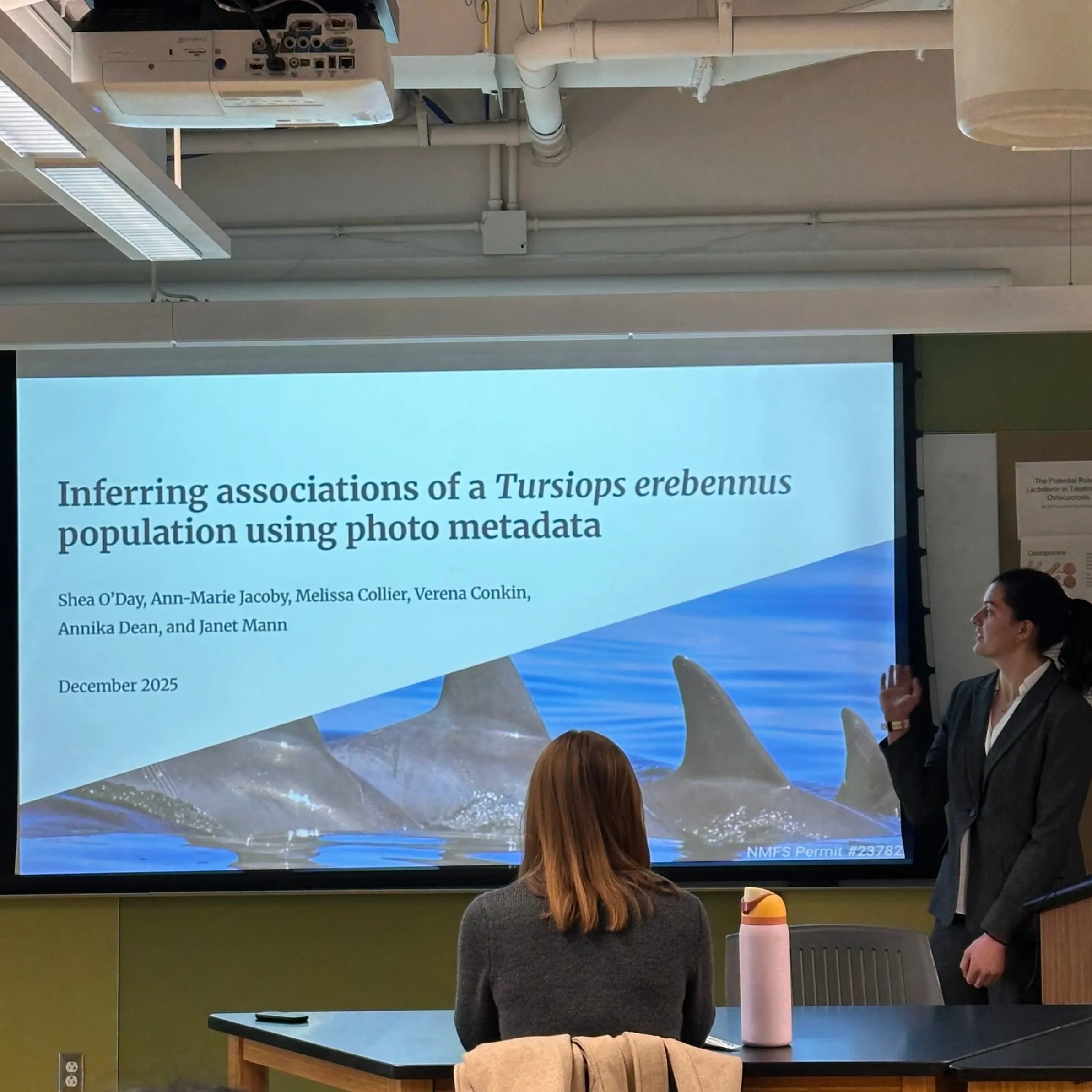
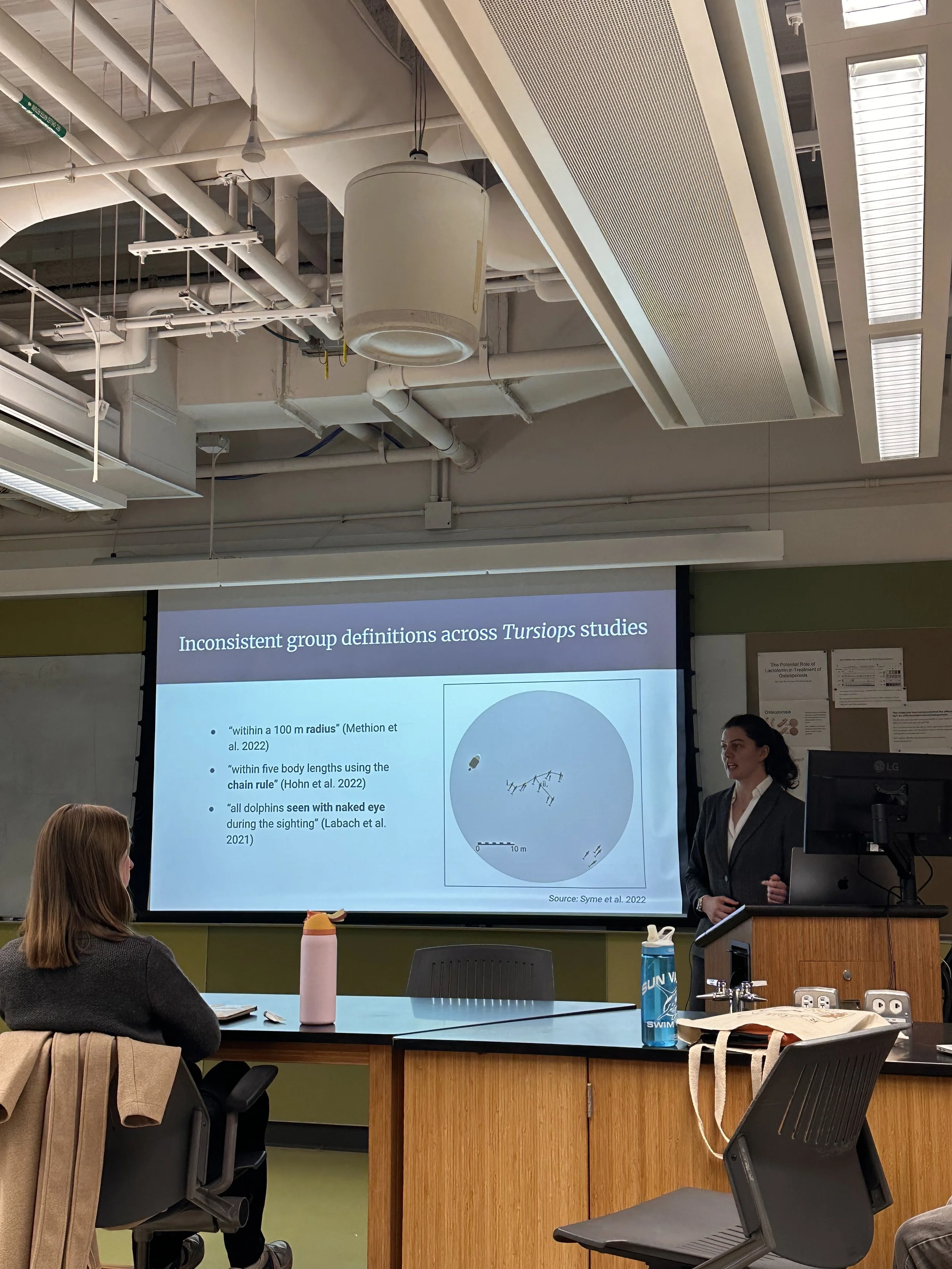
PCDP undergraduate researcher, Shea O’Day (Georgetown ‘26), presented her research regarding dolphin associations within the Potomac-Chesapeake Dolphin Project for her Research Intensive Senior Experience. 

This year-long experience is designed to allow biology students the chance to conduct an independent research project under the mentorship of a biology faculty advisor.

O’Day’s research centers around determining relationships and associations between the dolphins. Understanding these associations is crucial for tracking population development, social structure, and population and ecosystem health. This task is especially daunting for the PCDP as we have over ~2,000 dolphins in the Potomac-Chesapeake, and they often travel in large groups that do not necessarily imply close relationships between each and every dolphin.

In order to determine these relationships, O’Day is investigating the viability of using metadata from photos to determine a threshold of association. O’Day is using the time intervals between photos of dolphins to set this threshold, so that the project can use photos to ascertain meaningful associations. 

After this presentation, O’Day will continue to analyze her research and hopefully will be able to determine a threshold from the photos that can tell us more about associations between the dolphins. 

Georgetown University Features a Day in the Life with 2025 Field Assistant Kelly Bates

This summer Kelly Bates, a 2025 field assistant and current lab assistant, participated in Georgetown’s summer storytelling series and shared a day in the life with her and the PCDP! In this article and the accompanying video posted on social media, Bates shared our daily schedule in the field and the importance of our research.

Read the whole article here!

Check out the social media video!

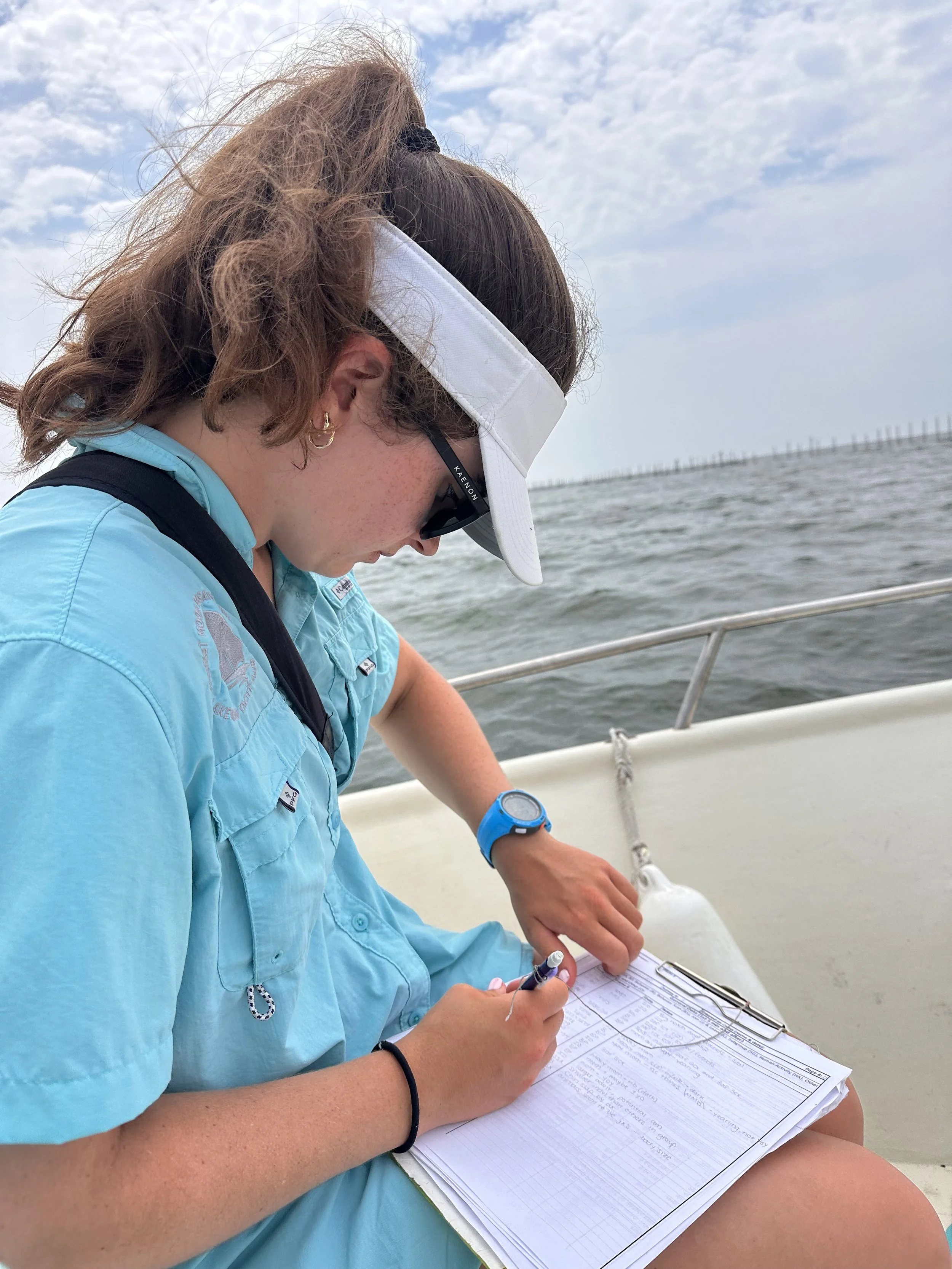
Kelly Bates recording survey data. Photo taken by Arielle Solomon

Washington Post Highlights the Potomac Chesapeake Dolphin Project

In an article published in The Washington Post, the 2025 field team led by PhD candidate Verena Conkin welcomed reporters onto the R/V Ahoya to share our research and methodologies. Conkin and field assistants introduced the reporters to the excitement of field work, complete with photography, drone flights, and almost 100 dolphins. The article also describes the history of our project and the our collaboration with the community. Click the button below for the article!

Read More

Dr. Janet Mann Writes Article for Georgetown's Earth Commons Institute

In this Common Home Magazine article, Dr. Janet Mann describes how house hunting in Virginia led her to start the first research project on the dolphins inhabiting the Potomac River and Chesapeake Bay. She also discusses current research our lab members are conducting and the contributions by the Earth Commons in supporting our work.

Tracking the Impact of Offshore Construction on Chesapeake Bay Dolphins Using Sound Data

Through the use of hydrophones, a technology which records underwater sounds, researchers of the PCDP and Chesapeake DolphinWatch have begun to understand how the construction of offshore wind turbines affects the dolphin population in this area. Read more about this topic in Chesapeake Bay Magazine’s recent article.

Recognizing Individual Dolphins Linked to Increased Empathy and Conservation Efforts

A newly published article by Georgetown University postdoctoral fellow Pauline Smith and Georgetown professors Dr. Janet Mann and Dr. Abigail Marsh dives into the intersection between human psychology and environmental conservation. Specifically, Smith et al. inspect whether the tendency for humans to exhibit greater empathy towards recognizable individuals is applicable to individual dolphins, and if this recognition causes an increased desire to take conservation action. Using photographs of Tamanend’s bottlenose dolphins collected by the PCDP, study participants were tested on their ability to recognize individuals and specific empathetic reactions towards them. The results showed that a greater ability to recognize an individual dolphin is correlated with higher empathy, as well as an increased enthusiasm to participate in real-world environmental actions. Additionally, pairing a photo of an injured dolphin with a narrative describing the injury led to an increased willingness to donate to a conservation organization. This is the first study that has examined the relationship between human recognition of individual wild animals and whether this can increase sustainable behaviors. The ability of non-expert individuals to recognize and feel empathy towards animals is important in the field of conservation because, as demonstrated in this article, it can lead to more altruistic behavior and therefore improved environmental action.

Understanding the Presence of Dolphins in the Chesapeake Bay

Recently, there has been growing debate about whether the increased presence of dolphins in the Chesapeake Bay signifies improved water quality. The Baltimore Sun’s Dan Rodricks discusses with the PCDP’s Ann-Marie Jacoby why this might not be the case. With only seven years of data on this dolphin population, we can’t assume that the population is increasing despite high numbers of dolphins being sighted. Jacoby’s research focuses on gathering historical information on these dolphins and has found through different media that this dolphin population has been in the area for a long time.

Read the full story here.

PCDP Researchers Publish Paper on Barnacle Infestation on Cetaceans

PCDP alumni lab assistant Milan Dolezal along with PCDP Director Dr. Janet Mann, Associate Director Ann-Marie Jacoby, Project Member Melissa Collier, and Lab Assistant Colin Murphy, published an article focused on the impact of temperature and hydrodynamics on the growth of the barnacle species Xenobalanus globicipitis on cetaceans. Dolezal et al. found that both of these factors impact the location of attachment of X. globicipitis on the dorsal fin. These results indicate that with global warning and rising sea surface temperatures, the infestation of these barnacles on cetaceans will be more common due to their affinity for warmer temperatures.

Check out the article here.

Bay Journal on the Increase in the Potomac Dolphin Population

Whitney Pipkin of the Bay Journal discusses the recent resurgence of the dolphin population in the Potomac and the researchers studying these animals, including the PCDP and Chesapeake DolphinWatch.

Check out their more recent feature on the Potomac dolphins here.